Step 1
Problem framing & research
Identified how trainers manage clients across fragmented tools causing inefficiencies and poor visibility. Focused on gaps in structure, time management and access to client data.
Project
Atlas
Role
Founder & Lead Designer
Date
2025
Project
Atlas
Role
Founder & Lead Designer
Date
2025
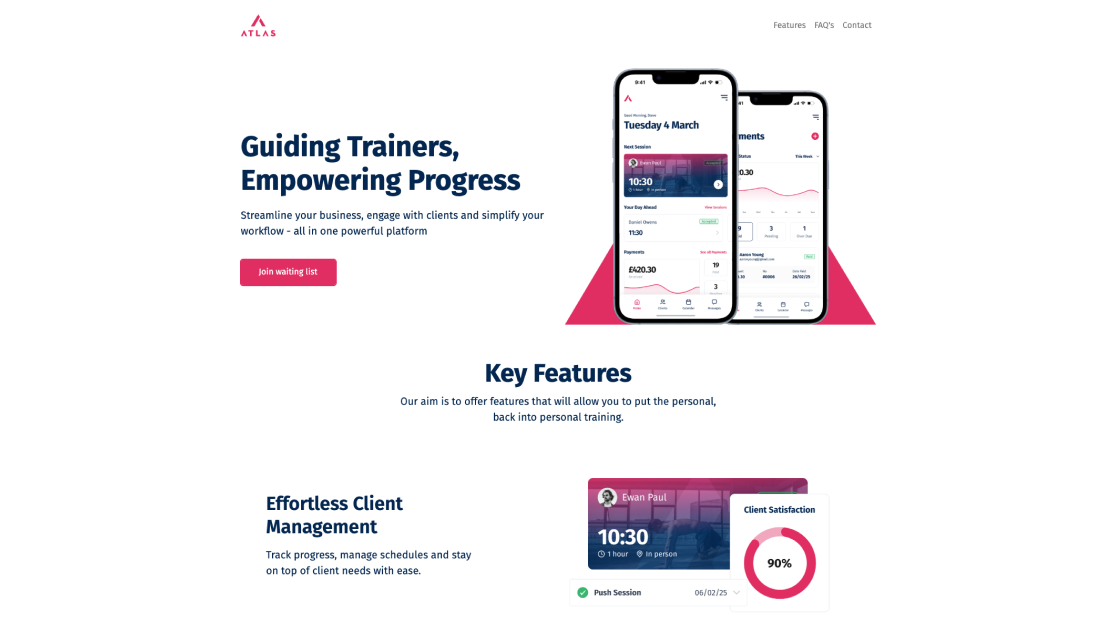
Personal trainers were managing clients across multiple disconnected tools - spreadsheets, messaging apps, notes, and payment platforms - creating fragmented workflows and high cognitive load. This led to inefficiencies in scheduling, poor visibility of client progress, and inconsistent communication. The core challenge was designing a unified system that reduced friction without overwhelming users with complexity.
For Atlas, I focused on understanding how trainers actually piece their day together across admin, communication and delivery. The process centred on simplifying a fragmented service model into a single system that supported both business operations and client relationships.
I broke the project into the jobs trainers needed to complete most often: scheduling, monitoring progress, handling payments and staying in touch with clients. That allowed me to prioritise the areas where context-switching was hurting efficiency most. From there, I mapped clearer task flows, reduced interface noise and designed around moments where trainers needed quick visibility rather than deep reporting.
Step 1
Identified how trainers manage clients across fragmented tools causing inefficiencies and poor visibility. Focused on gaps in structure, time management and access to client data.
Step 2
Mapped workflows across onboarding, tracking and communication to uncover friction points. Highlighted where context switching was slowing down day to day tasks.
Step 3
Defined core features including scheduling, client profiles and progress tracking. Prioritised simplicity to support real world trainer workflows.
Step 4
Structured the platform into clear areas including dashboard, clients, scheduling and payments. Ensured navigation supported quick access to key tasks.
Step 5
Developed wireframes to simplify flows and reduce user effort. Focused on minimising steps and improving clarity across interactions.
Step 6
Applied a clean consistent UI to improve clarity and usability. Balanced functional design with a professional and modern aesthetic.
Step 7
Built interactive prototypes to test and refine the experience. Iterated on feedback to ensure flows felt intuitive and efficient.
I designed a centralised client management platform that streamlined key workflows into a single, intuitive interface. Through user interviews and journey mapping, I prioritised features such as scheduling, progress tracking, and client communication. The solution focused on clarity and usability - simplifying navigation, reducing task steps, and creating structured flows that aligned with real-world trainer behaviours.
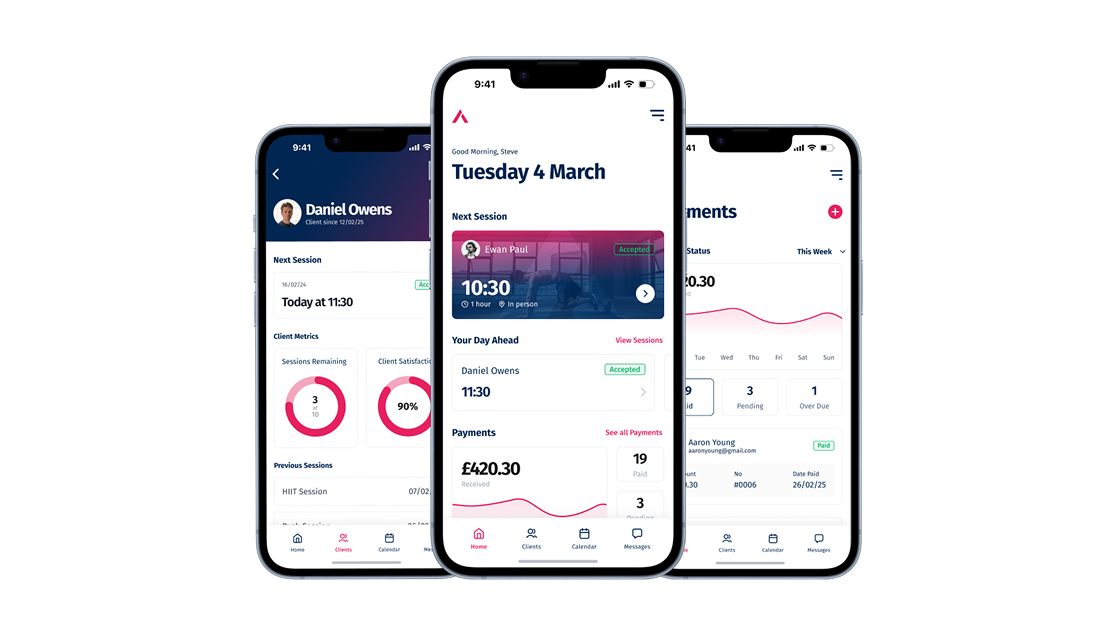
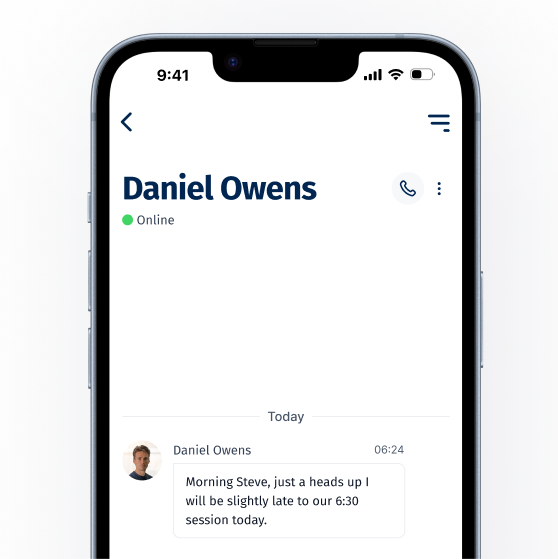
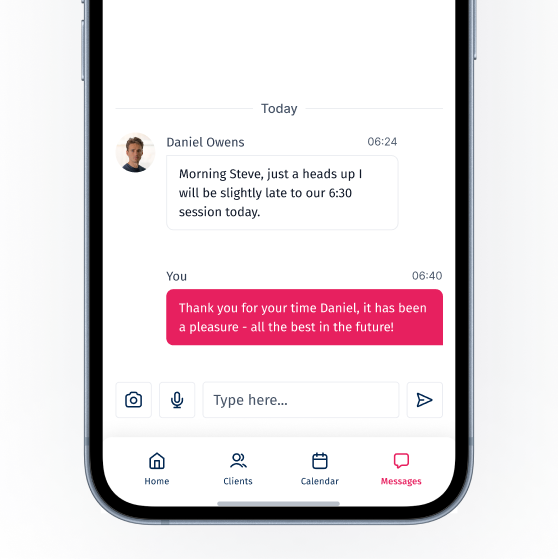
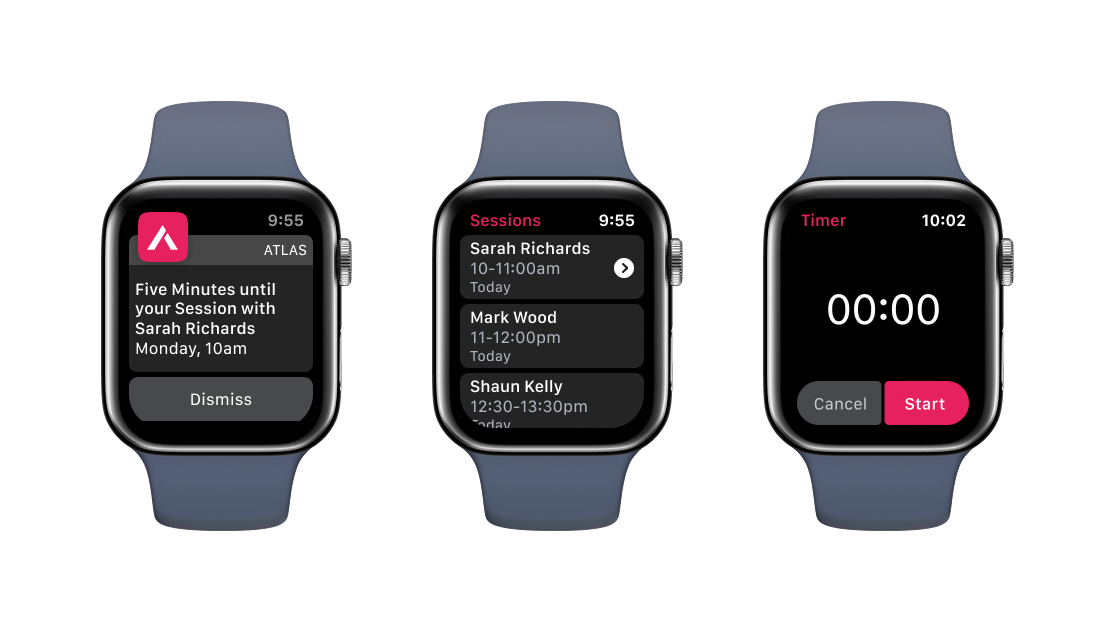
The final concept delivered a cohesive system that reduced administrative overhead and improved workflow efficiency for personal trainers. By consolidating tools into one platform, the design enabled better visibility of client data, more consistent communication, and a smoother day-to-day experience. The project demonstrated how thoughtful interaction design can transform fragmented processes into clear, scalable systems.
"The idea of Atlas would revolutionise how I conduct sessions with my clients, having a companion always on your side would take a lot of day-to-day stress away from admin tasks to allow me to focus fully on my clients."
Chloe, Female only Personal Trainer