Step 1
Context and research
Explored autonomous vehicle behaviour and user concerns around trust and control. Visited local showrooms and spoke with staff to understand how modern interfaces are used in real vehicles.
Project
Autoride
Role
Design Lead
Date
2023
Project
Autoride
Role
Design Lead
Date
2023
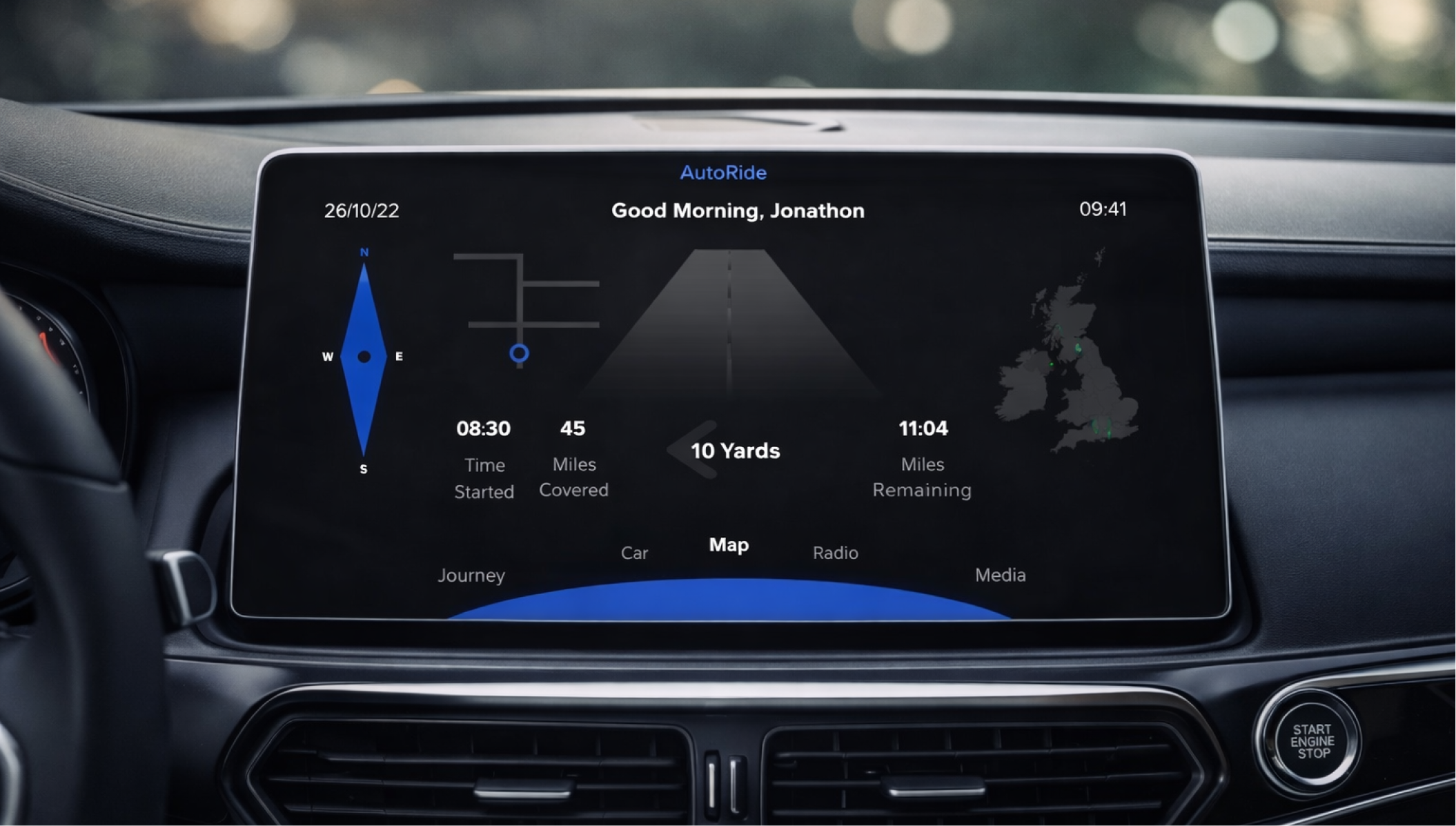
Designing for autonomous vehicles introduces a fundamental UX challenge: users are no longer drivers, but passengers with reduced control. This creates uncertainty around trust, system awareness, and decision-making. Existing research shows that without clear communication, users can feel anxious or disconnected from the vehicle’s behaviour. The challenge was to design an interface that balanced automation with user agency — helping users understand what the vehicle is doing, why it’s doing it, and how they can interact with it without increasing cognitive load.
AutoRide’s process centred on trust-building. I explored how interface design could reduce uncertainty in an autonomous setting by making the vehicle's behaviour more legible, explainable and collaborative from the passenger's perspective.
I treated the project as a communication problem as much as an interface one, focusing on what users would need to see in order to feel comfortable handing over control. The process involved mapping moments of uncertainty, identifying where reassurance and explanation mattered most and translating those into clear feedback systems and interaction touchpoints. Each iteration aimed to balance sophistication with calm, ensuring the UI informed users without overwhelming them.
Step 1
Explored autonomous vehicle behaviour and user concerns around trust and control. Visited local showrooms and spoke with staff to understand how modern interfaces are used in real vehicles.
Step 2
Mapped passenger journeys to understand when reassurance, feedback and interaction were needed. Focused on real moments of uncertainty.
Step 3
Defined what information should be prioritised including route, environment and vehicle intent. Reduced noise to support quick understanding.
Step 4
Designed simple controls to allow user input without disrupting automation. Balanced system control with a sense of user involvement.
Step 5
Developed clear visual feedback to explain what the vehicle is doing and why. Focused on building trust through transparency.
Step 6
Applied a clean, minimal UI to support clarity and reduce cognitive load. Ensured the interface felt calm and easy to interpret.
Step 7
Created high fidelity prototypes to test flows and interaction clarity. Refined the experience to feel intuitive, believable and trustworthy.
I designed AutoRide, an in-car interface that repositions the vehicle as a collaborative system between human and AI. The interface focused on transparency and control, providing real-time feedback on the car’s decisions, environment, and route planning. Key features included a dynamic visualisation of the car’s surroundings, clear explanations of autonomous actions, and simple controls for user input. The design aimed to build trust and comfort by making the vehicle’s behaviour more predictable and giving users a sense of involvement in the journey.
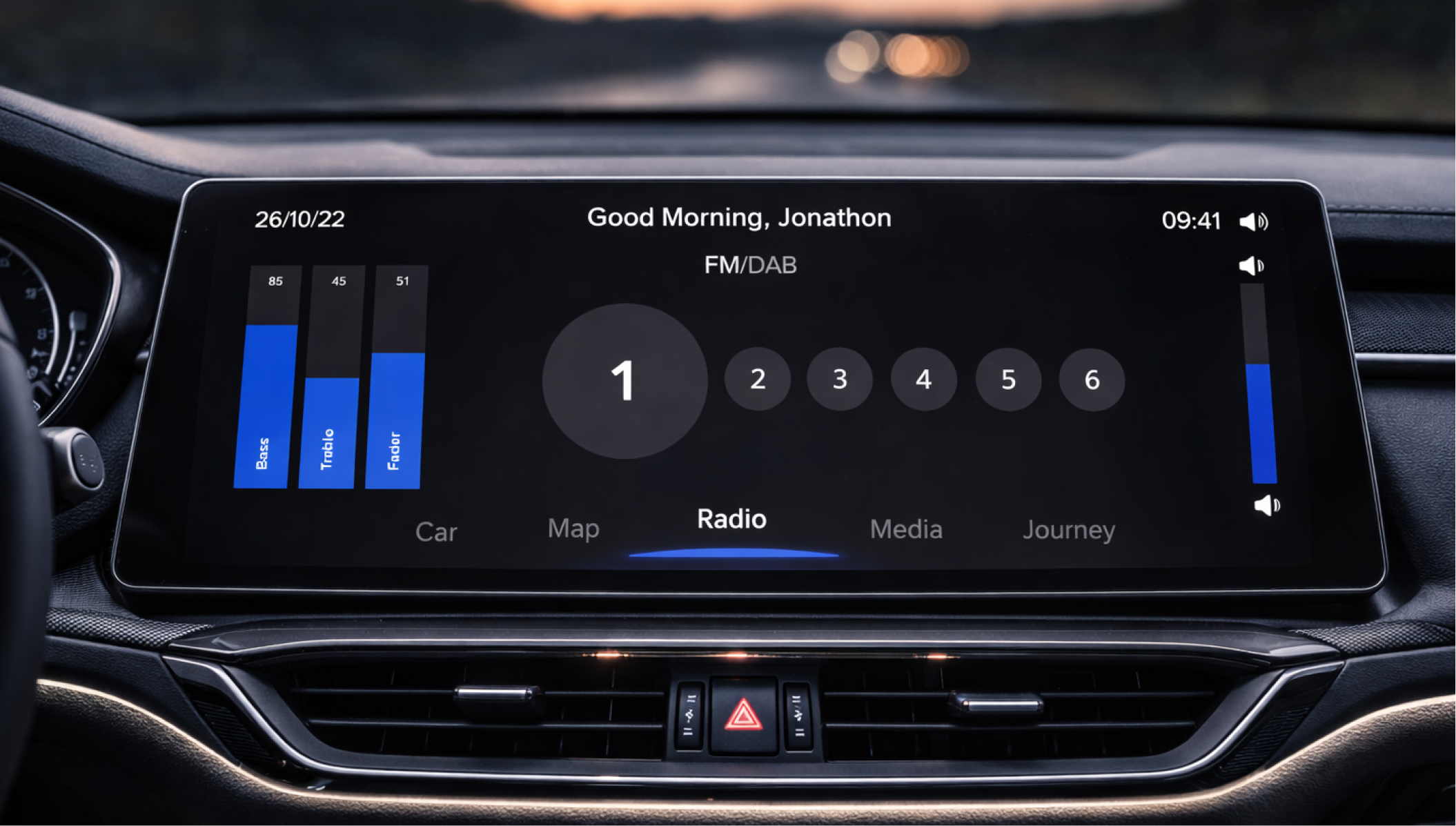
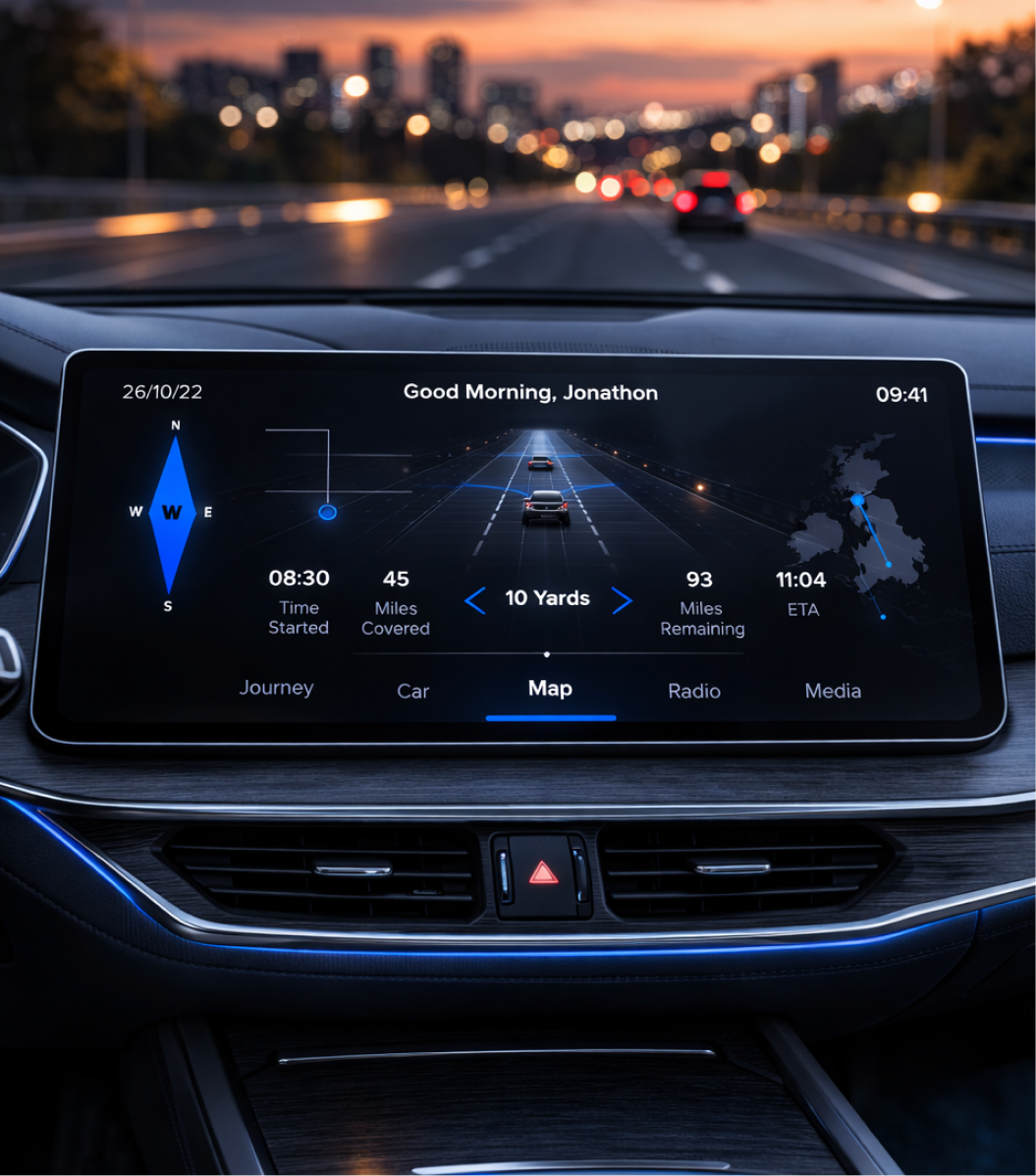
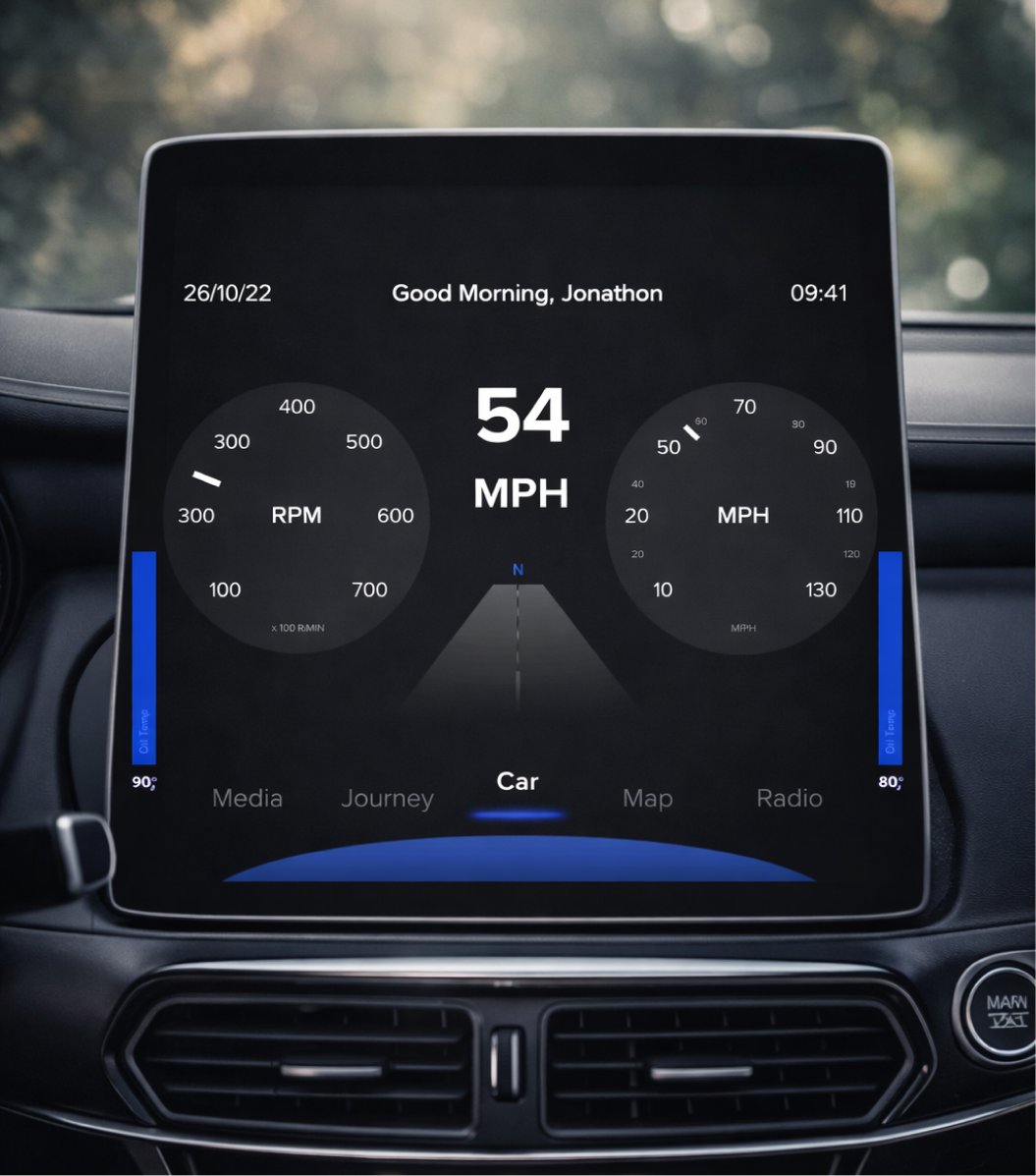
The final concept delivered a cohesive UI system that improved user confidence and engagement within an autonomous driving context. By introducing transparency and lightweight control, the design reduced feelings of uncertainty and repositioned the user as an active participant rather than a passive passenger.
"The AutoRide interface was a great attempt at visioning the future of autonmous vehicles - with this interface, as a passenger I would feel much more comfortable and in control, even though I wouldn't be driving."
Mark, Tesla Belfast